

UMH and CSIC join forces to assess innovative feeds for sustainable and climate-resilient aquaculture2026-10-15
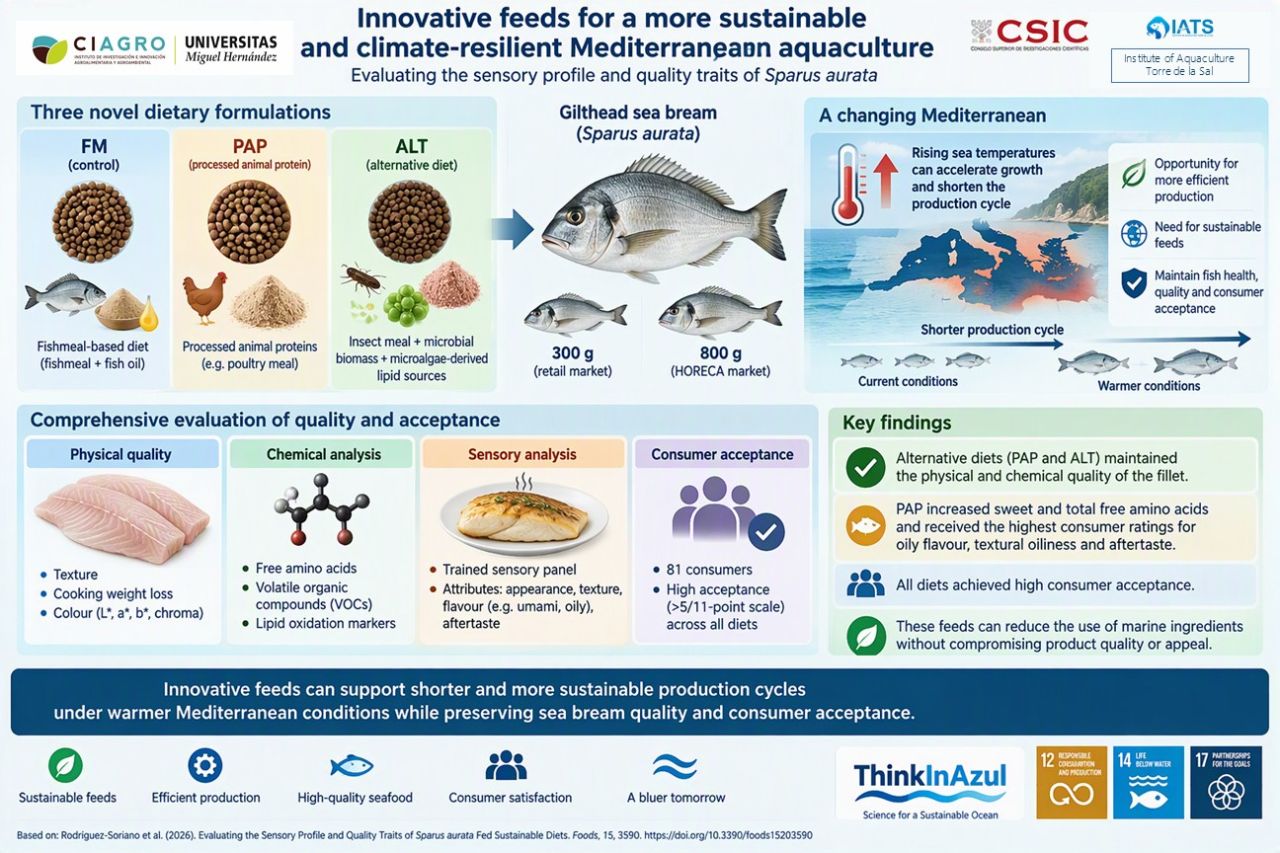
Researchers from CIAGRO at Miguel Hernández University (UMH) and the Institute of Aquaculture Torre de la Sal (Nutrigenomics and Integrative Biology Group, IATS-CSIC) evaluated three feed formulations for farmed gilthead sea bream:
FM: a conventional diet based on fishmeal and fish oil.
PAP: a formulation containing processed animal proteins, including poultry-derived ingredients.
ALT: an alternative diet combining insect meal, microbial biomass and microalgae-derived lipid sources.
The study was conducted in the context of a warming Mediterranean, where higher water temperatures may accelerate fish growth and contribute to shorter production cycles. Under these changing conditions, innovative feeds must sustain production efficiency while preserving fish quality and consumer acceptance.
The results showed that PAP and ALT can reduce dependence on marine ingredients while maintaining the main physical and chemical quality traits of the fillet. All diets achieved high consumer acceptance, while PAP received the highest ratings for oily flavour, textural oiliness and aftertaste.
This UMH-CSIC collaboration highlights the importance of evaluating not only growth and sustainability, but also the sensory profile and quality of the final product. Integrating nutrition, environmental adaptation and consumer perception will be essential for the development of more sustainable and climate-resilient Mediterranean aquaculture.
Evaluating the Sensory Profile and Quality Traits of Sparus aurata Fed Sustainable Diets, published in Foods, 15: 3590 (2026).