

Biological Age as a New Tool to Anticipate Fish Welfare in Aquaculture2026-09-01
Can fish welfare be read before the warning signs become visible?
A recent study of the Fish Nutrigenomics and Integrative Biology Group from the Institute of Aquaculture of Torre de la Sal (IATS-CSIC) suggests that the answer may be Yes!
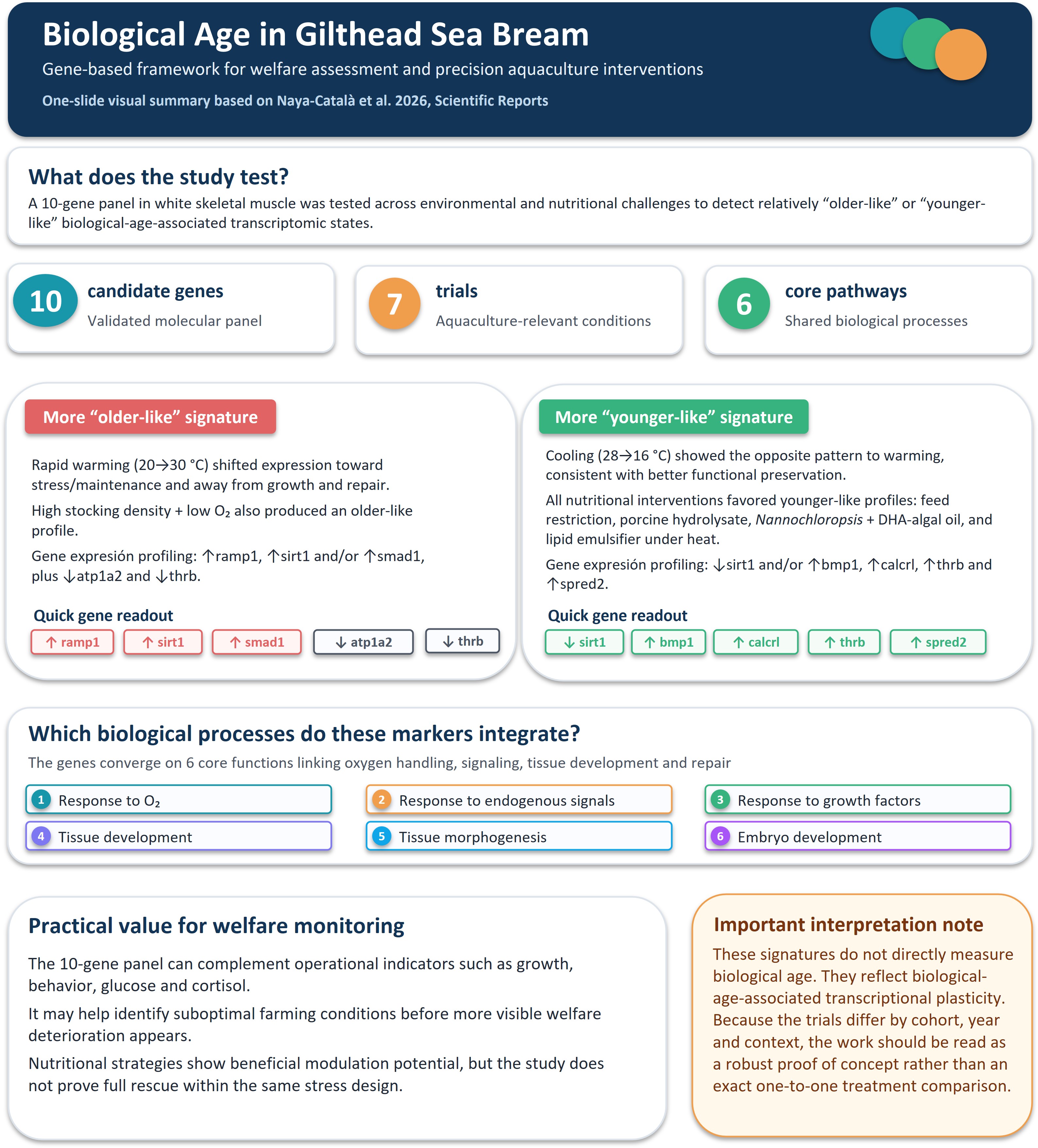
Using a 10-gene panel in white skeletal muscle, the researchers explored in gilthead sea bream (Sparus aurata) how biological-age-associated transcriptomic signatures respond to 7 aquaculture-relevant environmental and nutritional challenges.
The pattern that emerged was especially compelling: rapid warming and high stocking density combined with low oxygen were associated with more “older-like” molecular signatures, whereas cooling and the nutritional interventions tested were associated with more “younger-like” profiles.
Importantly, this is not presented as a strict biological clock. Instead, the study positions the gene panel as a functional framework to interpret transcriptional plasticity linked to welfare, muscle homeostasis, and adaptive capacity.
That distinction matters. In aquaculture, the real opportunity is not only to measure stress once it is already evident, but to identify earlier when rearing conditions begin to shift fish toward greater physiological strain.
From a practical perspective, this kind of molecular phenotyping could eventually complement conventional indicators such as growth, behavior, glucose, and cortisol, supporting a more proactive and precise approach to welfare monitoring.
A strong example of how omics-based tools may help bridge fundamental biology and decision-making in precision aquaculture.
Could this type of molecular readout become part of routine welfare assessment in the future? We believe this is a promising step in that direction.
Source: Naya-Català et al., 2026, Decoding biological aging in Sparus aurata through a gene toolbox to infer welfare assessment and precision aquaculture interventions. Scientific Reports (https://www.nature.com/articles/s41598-026-60470-5)