

New insights into the intestinal microbiome of farmed gilthead sea bream 2026-03-12
The latest study published by the Fish Nutrigenomics and Integrative Biology Group of Institute of Aquaculture Torre de la Sal (IATS-CSIC) provides new insights into the dynamics and interactions between different bacterial communities inhabiting the gut of farmed gilthead sea bream across intestinal regions and post-feeding times.
In particular, the research focused on the structural and functional composition of two microbial fractions: the resident bacteria that colonize and adhere to the intestinal mucosa (autochthonous microbiota) and the transient bacteria associated with the intestinal lumen and digesta (allochthonous microbiota).
This work, developed within the framework of the GVA-ThinkInAzul Program of Marine Sciences and the Spanish MCIU project Bream HOLOBIONT, aimed to advance our understanding of the organization and temporal dynamics of these microbial communities. Such aspects, together with the lack of standardized methodological protocols, currently represent an important limitation in fish microbiome research.
The results showed that autochthonous bacteria form a more specialized and stable ecosystem associated with the intestinal mucus layer, whereas the allochthonous fraction is more dynamic and variable, displaying higher richness and diversity regardless of the intestinal section analyzed.
Although both communities interact and complement each other, functional analyses revealed clearly distinct metabolic profiles. Autochthonous bacteria were mainly enriched in protein metabolism pathways, while allochthonous microorganisms contributed predominantly to bile acid and carbohydrate metabolism, also underlying their strict connection with the host metabolism.
Overall, this study highlights the importance of distinguishing between different microbial fractions when evaluating fish physiology, nutrition, and welfare. The work also contributes to the Special Issue of the journal Animals entitled “Fish Microbiome, a Novel Tool to Improve Sustainable Production and Welfare in Aquaculture.”
Beyond promoting methodological standardization in microbiome research, the Special Issue, guest edited by Prof. Jaume Pérez-Sánchez and Dr. Federico Moroni, aims to address existing knowledge gaps regarding molecular mechanisms, host–microbiota interactions, and the identification of robust microbial biomarkers, aspects that remain insufficiently explored in the field.
The Special Issue is still open for submissions (deadline: 31 October 2026) and welcomes original research articles and reviews related to these topics, as well as broader studies focusing on the role of the fish microbiome in aquaculture.
For submission details, please visit:
MDPI – Animals: https://brnw.ch/21wRfyv
Research article available at: https://doi.org/10.3390/ani16030360
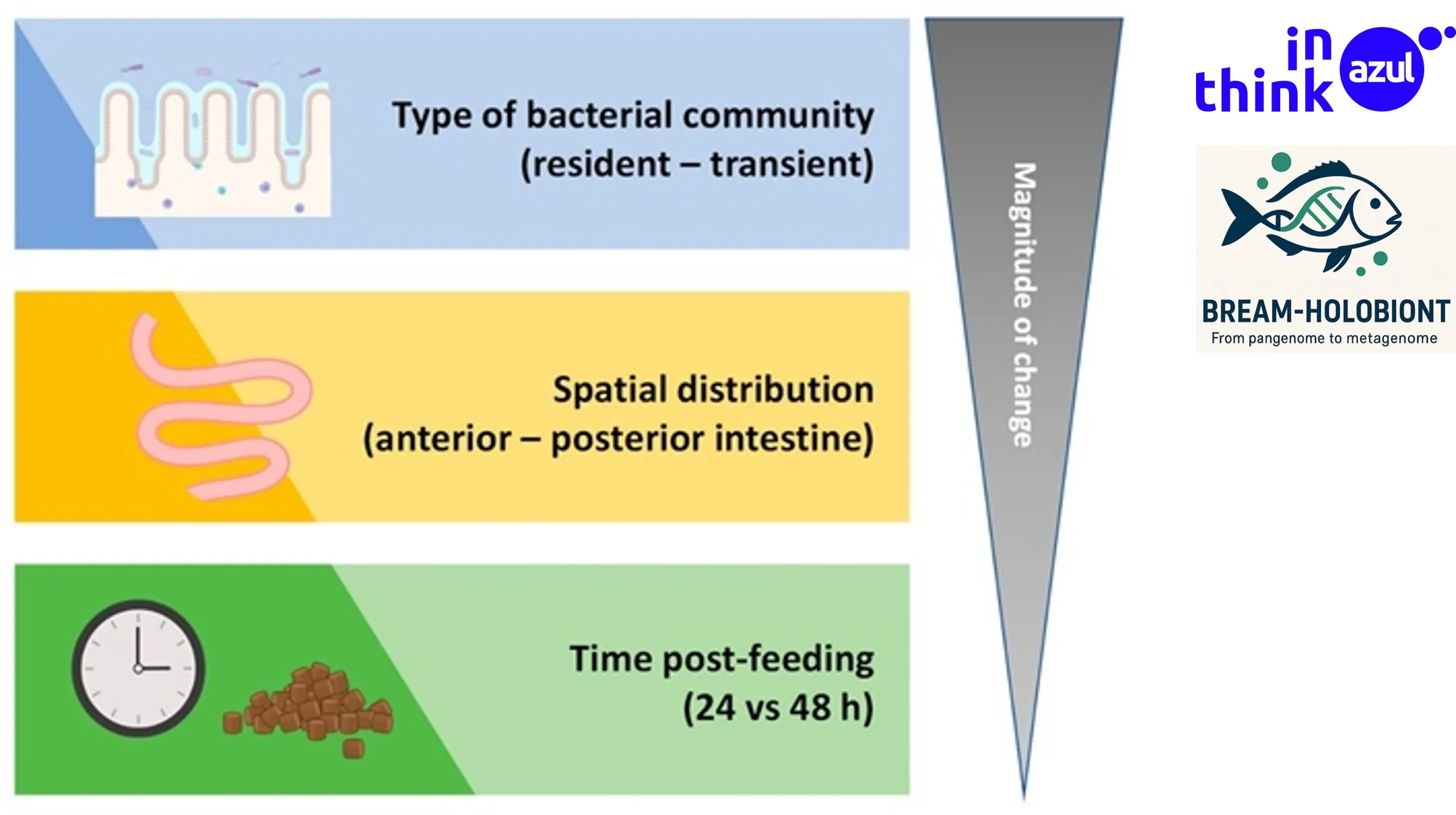
Schematic representation of the relative influence of bacterial community type (autochthonous vs. allochthonous microbiota), intestinal region, and post‑feeding time on the gut microbiome composition of farmed gilthead sea bream, as reported in the study.